Tradie website blog Australia
Tradie website blog: does an Australian business need one?
Use one buyer question and a stop rule before you pay for another page.
Direct answer
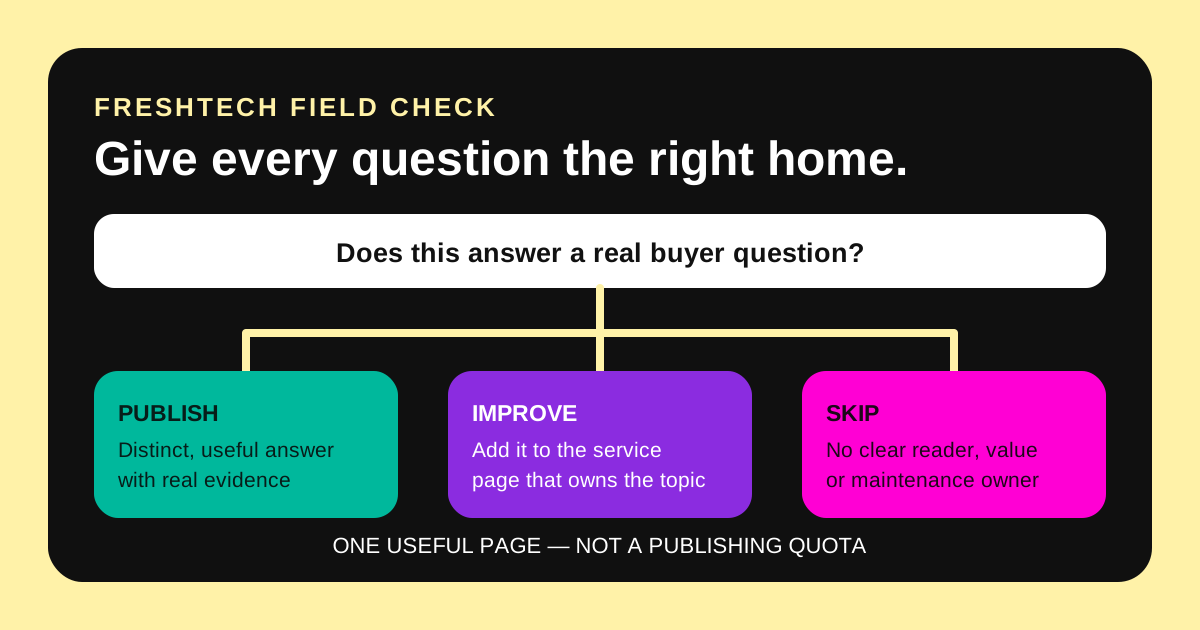
No. A tradie website does not need a blog just because an agency package includes one. Get the service pages, real proof, business details and contact path right first. Add an article only for a recurring buyer question that deserves its own page. The answer must add value and stay accurate. If it belongs on an existing service page, improve that page. If nobody can explain who it helps, skip it.
A useful article can help someone decide before calling. It can also give Google a clear page about that question. That does not turn a content calendar into a ranking machine.
The weak assumption is that more pages mean more visibility. Extra pages can repeat answers. They can leave old advice online too. Google says its systems aim to favour helpful, reliable, people-first content. It warns against high-volume search-first work and false freshness.
What must be right before you start a tradie blog
A new article cannot repair a weak main website. A plumber with no clear hot-water page does not need a general post about “five plumbing tips”. They need a useful hot-water page.
Check these basics before adding a tradie website blog:
- Services: each important service is named and explained in plain words.
- Area: the site states where the business genuinely works without copied suburb pages.
- Proof: job photos, licences, business details and reviews are used honestly.
- Action: phone, quote and booking paths work on a normal mobile.
- Ownership: the business controls the domain, website account and published material.
- Upkeep: a named owner will fix the page when advice, services or rules change.
Use the full tradie website checklist before paying for ongoing articles. It is usually better to fix a missing buying page than build a pile of early-stage reading.
Publish an article, improve a service page, or skip it?
Start with the buyer question, not the format. Then choose the smallest useful page change.
| Choice | Use it when | Example | Stop sign |
|---|---|---|---|
| Publish an article | The buyer has a distinct question. A full answer would interrupt the service page. | “Repair or replace a leaking hot-water unit?” | You cannot add real limits, steps, proof or sources. |
| Improve a service page | The answer helps someone understand that service, price factors, area or next step. | Add “what affects the quote” to the existing switchboard-upgrade page. | A second page would target the same question and compete with the main service page. |
| Skip it | The idea is generic, off-topic or hard to maintain. It only fills a quota. | “Ten inspirational renovation quotes.” | The provider cannot name the reader, decision or next action. |
This choice also controls cannibalisation. If two pages answer the same question for the same person, combine them or give each a clear job. The one-page versus multi-page website guide uses the same buyer-question rule.
Five tradie article types that can earn their place
Good topics often come from the phone, quote requests or a site visit. They stay close to the service and help a real buyer.
- Decision guides. Compare two valid paths and state when each suits. Example: repair or replace a tiled roof after storm damage.
- Cost-factor guides. Explain what changes a quote. Do not invent one price for every job. Name access, materials, condition, testing and disposal where relevant.
- Preparation guides. Tell the customer what to photograph, clear, measure or bring before the visit. This can reduce avoidable back-and-forth.
- Safety and urgency guides. Explain warning signs and safe first actions. Say when to stop and call a licensed professional. Use current official sources.
- Proof-led job notes. Show a real job with permission. Include the problem, limits, work and result. Never turn one result into a universal promise.
A list of “blog ideas for tradies” is not a plan. Do not swap one trade name into the same article. Useful detail comes from the work, the buyer question and the proof.
What a useful tradie article must contain
Google's people-first questions are a sensible editing test. Is the page original? Does it answer the reader's goal? Is the author clear? Would the site's real audience use it?
Before publishing, ask six questions:
- Who is this for? Name the homeowner or business buyer and the decision they face.
- What is the direct answer? Put it near the top. Do not make people read an essay to find “yes”, “no” or “it depends”.
- What can this business add? Use real process, limits, photos or a plain decision rule. Do not claim personal experience that did not happen.
- Which facts need sources? Check safety, legal, licence, price and product claims on publication day.
- Where should the reader go next? Link to the relevant service or contact path with words that describe it.
- Who maintains it? Set a review trigger for changed rules, prices, services, suppliers or business details.
Google's SEO Starter Guide says useful content should be clear, unique and current. It also supports link text that describes the next page. That helps people and Google know where the link goes. It does not promise first place.
How often should a tradie publish blog articles?
Publish when you have a distinct, useful answer—not because Friday is “blog day”. A fixed weekly or monthly rhythm can help a team manage work. It is not proof that the work deserves to go live.
One strong article can beat four thin pieces. Review it before adding more. Google says it has no preferred word count. Its guide also warns against adding lots of content just to make a site seem fresh.
Automation does not excuse weak work. Google's spam policy calls it scaled content abuse when many low-value, unoriginal pages are made mainly to manipulate rankings. The rule applies no matter how those pages were made.
Simple publishing rule: do not repeat an intent or invent experience. Support every claim. Give every page an owner. Never publish just to satisfy a counter.
How to test whether the blog is helping
Do not call an article successful on publication day. Search engines still need to discover, crawl and assess it. Google says a change can take from hours to several months to show. Some changes have no clear search effect.
| Check | What to record | What to do if weak |
|---|---|---|
| Live and crawlable | Correct URL, canonical, sitemap entry, internal link and visible text without a login. | Repair the technical block before judging the topic. |
| Search evidence | Search Console discovery, indexing, queries, impressions and clicks over a useful window. | Check intent and title; do not invent a rank from a private browser. |
| Buyer value | Relevant service visits, calls, quote starts and the questions people still ask. | Improve the answer or link path. Do not claim the article caused every enquiry. |
| Accuracy | Changed rules, services, pricing, availability, photos, links and source dates. | Update, merge, redirect or retire the page. |
Put those checks into normal website maintenance. Has Google not indexed the page yet? Check how long Google indexing can take before you call the article a failure.
Questions to ask before paying for tradie blog articles
Ask the provider for one brief before the first draft. It should name the question, reader, intent, existing page overlap, sources and next action.
- Which exact buyer question does this page own?
- Why is a new article better than improving an existing service page?
- Which current primary sources support every time-sensitive claim?
- What original information, process or evidence will the business add?
- Who is shown as the real author or publishing organisation?
- Which pages link to it, and which relevant page does it link back to?
- What will trigger an update, merge or removal?
- Can the provider show the live canonical, schema, sitemap entry and mobile page?
Do not accept copied wording or fake named authors. Reject spun suburb versions too. A report must show more than the number of pages published. A page is an asset only while it stays accurate, distinct and useful.
Common questions about tradie website blogs
Will a blog put my tradie website at the top of Google?
No. A useful article can make one topic clearer and may earn search visibility, but Google gives no first-place guarantee. Relevance, quality, competition, technical access and many other signals still matter.
Should every service have a matching blog post?
No. Put core buying facts on the service page. Use a separate article only for a distinct question that needs more space and a different reader journey.
Can AI write tradie articles?
AI can help with research, structure and drafting. The publisher must still check facts and remove filler. Authorship must be honest. The page needs real business knowledge. Mass low-value work made mainly to manipulate rankings can breach Google's spam policy.
Is an old blog worse than no blog?
It can be. Old safety advice, prices, service areas or licence details may mislead people. Review useful pages, merge repeated ones and remove or redirect work that no longer has a job.
Start with the next real buyer question
Write down the question. Check whether an existing page should answer it. Only then approve a new article. One useful page beats a quota full of filler.
For a plain website content check, ask FreshTech Community.
See all FreshTech guidesSources
- Google Search Central: Creating helpful, reliable, people-first content, viewed 29 August 2026.
- Google Search Central: Spam policies for Google web search, viewed 29 August 2026.
- Google Search Central: SEO Starter Guide, viewed 29 August 2026.
- Google Search Central: Article structured data, viewed 29 August 2026.
Note: FreshTech Community made this guide from current official sources and a fresh Australian result sample. It does not promise a Google rank, traffic number, lead or sale. It has no paid placement, fake result or copied text.