Website structure for Australian tradies
Should a tradie use a one-page or multi-page website?
Choose the smallest site that can answer each real buyer question well. Do not buy pages just to make the site look bigger.
Direct answer
A one-page website can be enough for a tradie with one clear offer, one service area and one main action. Use multiple pages when customers have genuinely different questions about separate services, projects, areas or policies. Do not add pages just for page count or rankings. Each page should have a distinct job, useful proof and a clear next step.
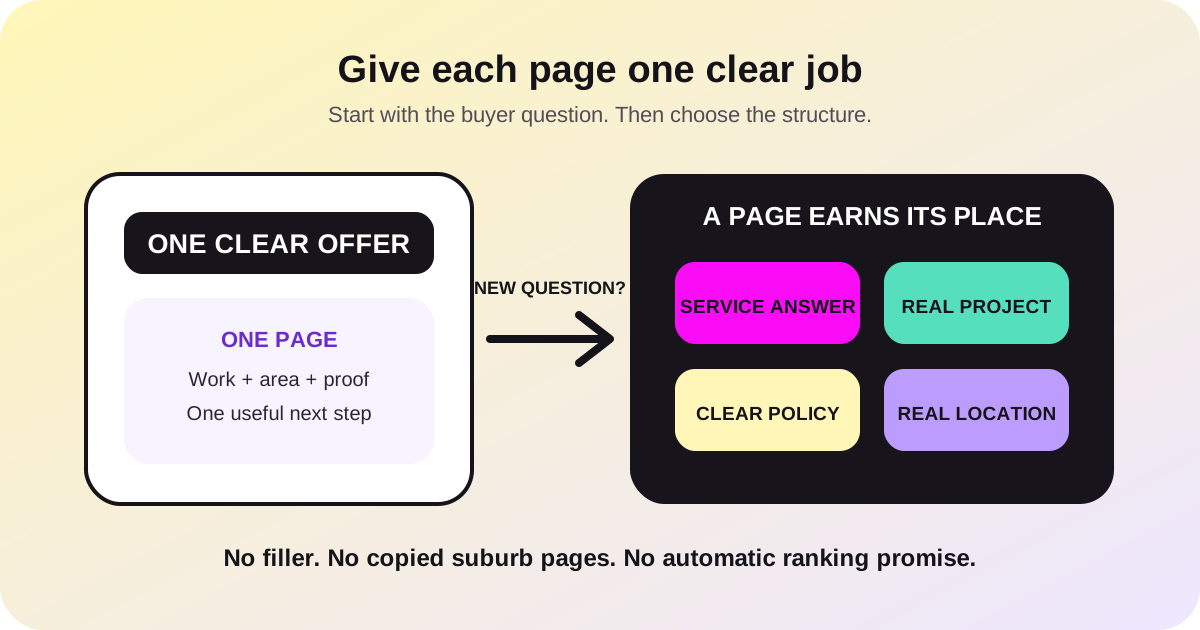
The choice is not really one page versus five pages. It is one customer journey versus several different questions. A roof repair buyer may need urgency, leak proof and a phone number. A full roof replacement buyer may need materials, process, finance and a site visit. Those are different decisions.
Start with the questions. Then choose the page structure. That is safer than buying a fixed page package before anyone has mapped the work.
Use the one-question test
Write down every reason a good customer may visit the site. Group answers that belong to the same decision. Split a topic only when the visitor needs a different answer or action.
| Question | One page may suit | Another page may earn its place |
|---|---|---|
| What do you sell? | One main service or a small set bought in the same way. | Services have different buyers, scope, proof or quote steps. |
| What must the buyer learn? | The answer is short and can sit near the call or quote action. | The buyer needs a full process, options, limits or common questions. |
| What proof exists? | A few real photos and trust facts support the whole offer. | A project or service has its own useful photos, result and context. |
| What should the visitor do? | Most people take the same next step. | Different jobs need a call, booking, inspection or detailed quote form. |
| Can you keep it current? | You want a small site with fewer facts to maintain. | You have an owner and process for keeping each page accurate. |
The Australian Government's business website guide gives the same starting point in broader terms. Define the site's goals. Think about the tasks customers want to do and the information they need. Group related pages in a way that makes them easy to find.
When one page is the sound choice
A one-page site is not a lesser website. It can be the right tool when the business and the buyer path are simple.
- One main offer. The business does one clear kind of work, or related jobs that customers buy in much the same way.
- One main service area. The visitor only needs a truthful list or map, not a different branch or local team.
- One main action. Most buyers should call, request a quote or book the same way.
- Short proof. A compact set of real job photos, credentials and public review links supports the offer.
- Low update load. The owner wants a useful site that is easy to check and keep true.
A sound one-page site still needs structure. Give the page a clear heading. Use sections for services, work area, proof, process, common questions and contact. Link the menu to those sections. Put the important answer first.
One page does not mean one screen. A useful page can be long enough to answer the buyer. The problem starts when a design hides key facts, not when the visitor needs to scroll.
When another page earns its place
Add a page because the customer needs it. Do not add one because a sales package includes five.
- A service has a different decision. Emergency plumbing and a bathroom renovation have different urgency, proof, scope and next steps.
- A project can teach the buyer something. A project page can explain the problem, choices and finished result. Use only real work and permissioned images.
- A policy needs a stable home. Deposits, cancellations, service limits and warranty facts may need more room than a short footer note.
- A location is a real operation. A separate branch with its own team, address or service facts may deserve a page. A suburb name swapped into near-copy text does not.
- A repeated question needs a full answer. If good customers keep asking it, a guide can answer it once and help staff link people to the same clear advice.
Google's SEO Starter Guide says logical organisation can help people and search engines understand how pages relate. It also says useful, original and well-organised content matters. It does not say that a larger page count creates a higher rank.
A practical page map by business stage
| Business stage | Useful starting structure | Reason |
|---|---|---|
| Solo and referral-led | One strong home page, plus required legal pages. | It confirms the firm, work, area, proof and next step. |
| Several distinct services | Home, one page for each real service decision, about and contact. | Each service can explain its own scope, proof and enquiry path. |
| Project-led work | Core pages plus a small set of detailed project pages. | Real examples can show how choices and outcomes differ. |
| Team or branches | Core pages plus real team or branch information where it changes the service. | The visitor can see who serves them and what is actually local. |
Required legal pages depend on what the business does and collects. Do not hide a privacy notice, terms or other important policy inside a sales section just to preserve a one-page label.
Search reality: more URLs are not an SEO plan
Search engines need to find and understand the content. Internal links and a sitemap can help discovery. Clear titles, headings and text can help explain each page. None of this promises indexing or rank.
A strong page answers one topic in full. A weak page changes a heading, suburb and phone number while repeating everything else. Google calls pages made to rank for similar queries and funnel people to one place doorway abuse. Its spam policies give location and city pages that lead to one destination as an example.
Do not build 40 pretend suburb pages. If the service, team, proof and answer are the same, keep one truthful service-area section. Add a local page only when there is useful local information for that customer.
One complete service page can rank for many related wordings. You do not need one page for every phrase. Google says its systems can understand how a page relates to several queries, even when every exact variation is not written on the page.
Keep the full answer usable on a phone
Google uses the mobile version of content for indexing and ranking. It recommends responsive design because the same HTML can work across screen sizes. It also warns against making primary content load only after a swipe, click or tap.
That matters for both layouts. On a long one-page site, the menu should help people jump to the right section. On a multi-page site, every page should keep the main navigation simple. In both cases:
- Keep the same important text on phone and desktop.
- Use headings in a logical order.
- Make call, form and booking controls easy to tap.
- Do not put essential service facts only inside an image or animation.
- Test links, menus and forms on a real phone before launch.
The W3C Web Accessibility Initiative explains that meaningful headings and page regions help people find and navigate content. That includes people using screen readers, keyboards, reader modes and smaller screens.
Eight questions before you pay for pages
- What buyer question does each page answer? Ask for a one-line job for every proposed page.
- What makes the answer distinct? Look for different scope, proof, process or next action.
- Who will write and approve the facts? The designer cannot invent trade detail.
- What real proof goes on the page? Name the photos, projects, credentials or public sources before the build.
- How will people reach it? A page needs a useful link from the menu, home page, service hub or related answer.
- Can a phone user get the same answer? Test the page without relying on hover or a wide screen.
- Who keeps it current? More pages create more facts, links and forms to check.
- What happens if the page has no distinct job? Merge it before launch. Do not pay to maintain filler.
Our tradie website acceptance checklist covers ownership, mobile use, search setup and enquiry delivery before final payment. The website maintenance guide shows what happens after launch.
Common questions
Is a one-page website bad for SEO?
No. A one-page site can be useful and searchable. Its limit is space and focus. If several services need very different answers, forcing them onto one page can make each answer thin or hard to find.
Does every service need its own page?
No. Split services when the buyer question, scope, proof or next step is genuinely different. Keep closely related work together when one clear answer serves the same customer.
How many pages should a tradie website have?
There is no universal number. Start with the pages needed to explain the real offer, build trust and complete the next step. Add another only when it has a distinct job.
Should every suburb have a page?
No. A list of near-copy suburb pages can be unhelpful and may fit Google's doorway-abuse examples. Use one truthful service area unless a location has its own operation and useful local facts.
Can I start with one page and add more later?
Yes. Plan clean links and keep the domain and site accounts under your control. Add pages as real services, projects and repeated customer questions give them a reason to exist.
Will a multi-page site rank higher?
Not just because it has more pages. A larger site creates more chances to answer distinct questions, but it also creates more work and more ways to publish weak or repeated content.
Buy the answer, not the page count
Map the real buyer questions first. Then build the smallest page set that can answer them with clear facts, proof and a tested next step.
Next, decide whether to build it yourself or hire a web professional, or check whether a website earns its keep yet.
See all FreshTech guidesSources
- Australian Government: Set up a business website, accessed 21 August 2026.
- Google Search Central: SEO Starter Guide, accessed 21 August 2026.
- Google Search Central: Spam policies for Google web search, accessed 21 August 2026.
- Google Search Central: Mobile site and mobile-first indexing best practices, accessed 21 August 2026.
- W3C Web Accessibility Initiative: Page Structure Tutorial, accessed 21 August 2026.
Editorial note: FreshTech Community prepared this guide from current official sources and live public evidence. It contains no paid placement, affiliate link, fabricated result, copied review or ranking guarantee.