Tradie website licence requirements Australia
Should a tradie put their licence number on their website?
Check the rule. Match the holder. Make the proof easy to check.
Direct answer
Often yes. For some licensed work, the website is an ad that must show the right licence details. There is no one rule for all Aussie tradies. The answer depends on the trade, work and place. Check the state rule first. Show the licence holder’s exact name, licence type or number and a clear way to check it. A number on its own is not enough.
A site can say a firm is licensed before a buyer calls. So the detail is both a legal and trust issue. NSW says internet pages can be building-trade ads. Queensland and WA set ad rules for electrical contractors. South Australia tells buyers to look for the supplier’s name and licence number on the site or other sales material.
These cases do not make one rule for the whole nation. Business.gov.au says the licence needs depend on the work and place. This guide gives a safe way to publish the proof. It is not legal advice. Check the live rule for the work you sell.
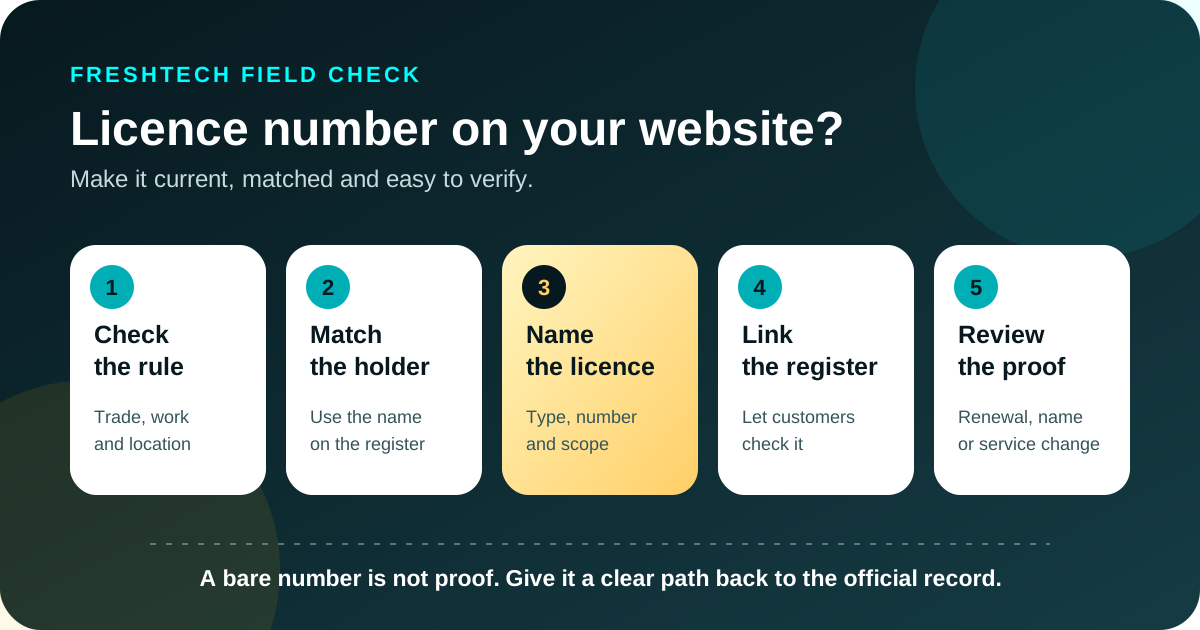
Quick check: find the rule for each trade and state. Use the exact holder name. Show the right licence. Add a link to the state check. Set a review date.
Treat the website as advertising
A service page does more than list what the firm does. It asks a person to hire the firm for set work. A state may treat that page as an ad. If so, take the same care as you would with a ute sign, flyer or trade listing.
That does not mean all licences go on all pages. A worker licence, contractor licence, firm licence and trade record can do different jobs. Use the detail the state asks for. Match it to the firm and the work in the ad. Do not pick the number that looks best.
Keep two questions separate:
- What must the firm display? Use the rule from the authority that issues or regulates the licence.
- What helps a buyer check the claim? Give clear facts. Link to the state’s public check when it has one.
A licence number on a tradie website should answer both questions without overstating what the licence covers.
There is no single Australian licence display rule
Rules change with the work and place. They can also change when the work in the ad changes. An electrician, builder, plumber and painter may not use the same licence in one state. A firm that works across state lines may need more than one check.
The table is a place to start. It is not a full list for all of Australia. Open the source for your exact work. Check the rule before you use it.
| Place and work | Official guidance | Website action |
|---|---|---|
| NSW covered building and specialist work | Internet pages are ads. The NSW guide says covered ads must show the licensee’s name and licence number, plus a firm phone number. | Match the name and number to the licence used for the work in the ad. |
| Queensland electrical contracting | WorkSafe Queensland says electrical contractors must put the registered name and contractor licence number on covered ads. It gives website and social page cases. | Use the electrical contractor detail. Do not use an unrelated worker or trade number. |
| Western Australia electrical contracting | WA Government says contractors must show the licence number, which starts with “EC”, on firm material such as ads. | Show the live EC number where the firm sells the covered work. |
| South Australian licensed occupations | SA Government says the supplier’s name and licence number should be on the site or other sales material for trades covered by its list. | Use the name and number that a buyer can find in the SA list. |
| Victoria building and plumbing checks | The Building and Plumbing Commission tells buyers not to trust an ad on its own. They should check the live status, work types and any limits. | Link to the state check. Do not claim that the number covers more work than the record shows. |
Rules and state body names can change. Use ABLIS to find where to start. Then check with the right state or territory body.
Build a licence proof block buyers can check
Do not paste a bare number in the footer and call it done. A buyer needs to know whose licence it is, what kind it is and where to check it.
Copy-ready structure
Trading name: [name used by the firm]
Licence holder: [name shown on the state check]
Licence: [type or category] — [number]
Covered work: [plain description that matches the scope]
Check it: [state check link]
Questions: [firm phone or email]
Only add a field when it is right and useful. Do not make up a class or type. Do not shorten the holder’s name if it breaks the match. Send the buyer to the state check, not a web search.
Put the block where a buyer is deciding whether to trust the work. That usually means the homepage and each relevant service page. A repeated footer can reduce missed pages, but it should not be the only place when the text is tiny or separated from the service claim.
Keep the detail as real page text, not just in a badge or image. A buyer can copy the text into a state search. Screen readers can read it. Search tools can make sense of it.
Check the holder, type, scope, status and state list
Before the block goes live, check five parts against the state record.
- Match the holder. Check if the licence belongs to the person, team, company or firm shown on the site.
- Match the licence type. A worker licence may not prove that the firm can sell or take on the work. Use the licence the rule asks for.
- Match the scope. Check the class, work types and any limits against each service on the page.
- Check the status. Confirm that the licence or registration is current and note any public conditions.
- Test the state search. Open the public result on a phone. Make sure a buyer can find the same holder and scope with no guesswork.
Victoria’s Building and Plumbing Commission is clear on this point. A buyer should not trust only the ad, card, quote or a person’s word. They should check the live record and the work it allows.
Avoid six common licence-detail mistakes
- Showing the wrong person’s number. A boss, worker or subbie may not be the licence holder the ad rule asks for.
- Using the wrong licence. A personal qualification, worker licence and contractor licence are not interchangeable.
- Claiming more work than the scope allows. The service list must fit the categories and limits on the current record.
- Using one state’s detail for the whole nation. Check each state where the firm sells and does the work.
- Hiding the number in an image. A badge may look neat, but the key detail should also be real text.
- Leaving old proof live. A new holder, firm name, licence status or service list can make the old block wrong.
Do not post the whole licence card unless the state asks for it. Public proof tends to need set firm details, not all the facts on a card. Use the state’s live record as the source.
Run a seven-step pre-publish check
- List the work in the ad. Note each service, trade and state or territory shown on the site.
- Find the state body. Start with ABLIS or the body named on the licence. Do not use a rival’s blog as legal sign-off.
- Read the ad rule. Check if it covers sites, social pages, search ads, trade lists and other sales material.
- Check the live record. Match the holder, type, number, scope, status and limits.
- Use real text. Add the proof block to the right page. Repeat it where the rule or buyer path calls for it.
- Test the public link. Ask someone outside the firm to find and check the record on a phone.
- Set a review trigger. Check again on renewal, name changes, new work, new states, staff changes and each planned site review.
Add the result to the job that already owns normal tradie website maintenance. Compliance proof should not depend on someone remembering it after a renewal.
Common questions
Does each tradie need a licence number on their website?
No one rule covers all trades and places in Australia. Some licensed work has clear ad rules. Other work may use a different trade record or no trade licence. Check the work, state and issuing body.
Is an ABN the same as a trade licence?
No. An Australian Business Number identifies a firm to the government, other firms and the public. A trade licence or record deals with the right to do set work. One does not replace the other.
Is a licence number in the footer enough?
It depends on the rule and page. A clear footer can help. But a tiny number with no holder, type or context is weak proof. Put the right detail near the service claim too.
Should the website link to the state licence check?
Yes, when the state has a public check. The link helps a buyer confirm the live status, scope and limits. Test it often. Web links and state body names can change.
What if the tradie works in more than one state?
Check each state and each service in the ad. Do not think one state licence or page format covers work in all places. Make the service area and licence scope clear.
Can the website say “fully licensed”?
Only when the claim is true for the work in the ad. It must not imply more rights than the state record shows. A clear holder, type, number and check link beats a broad slogan.
Fix the proof before polishing the badge
Check the state rule. Match the live record. Test the link on a phone. Then use the tradie website checklist to check the rest of the page.
Licence details work best by real job-photo proof and fair workmanship guarantee wording. If the page still hides what a buyer needs, ask FreshTech Community for a plain website check.
See all FreshTech guidesSources
- NSW Government: Building trade ads, viewed 25 August 2026.
- WorkSafe Queensland: Electrical licences and ads, viewed 25 August 2026.
- WA Government: Electrical licensing, viewed 25 August 2026.
- SA Government: Check licence holders, viewed 25 August 2026.
- business.gov.au: Licences and permits, viewed 25 August 2026.
- business.gov.au: Get an ABN, viewed 25 August 2026.
- Victoria: Find and check a practitioner, viewed 25 August 2026.
Note: FreshTech Community made this guide from current gov and state sources. It is not legal advice or a full list of licence rules. It has no paid link, fake review, made-up fine, rank promise or sales claim.