Do tradies need a website Australia
Does every tradie need a website?
No blanket sales pitch. Start with the work you have, the work you want and what customers need to check before they call.
Direct answer
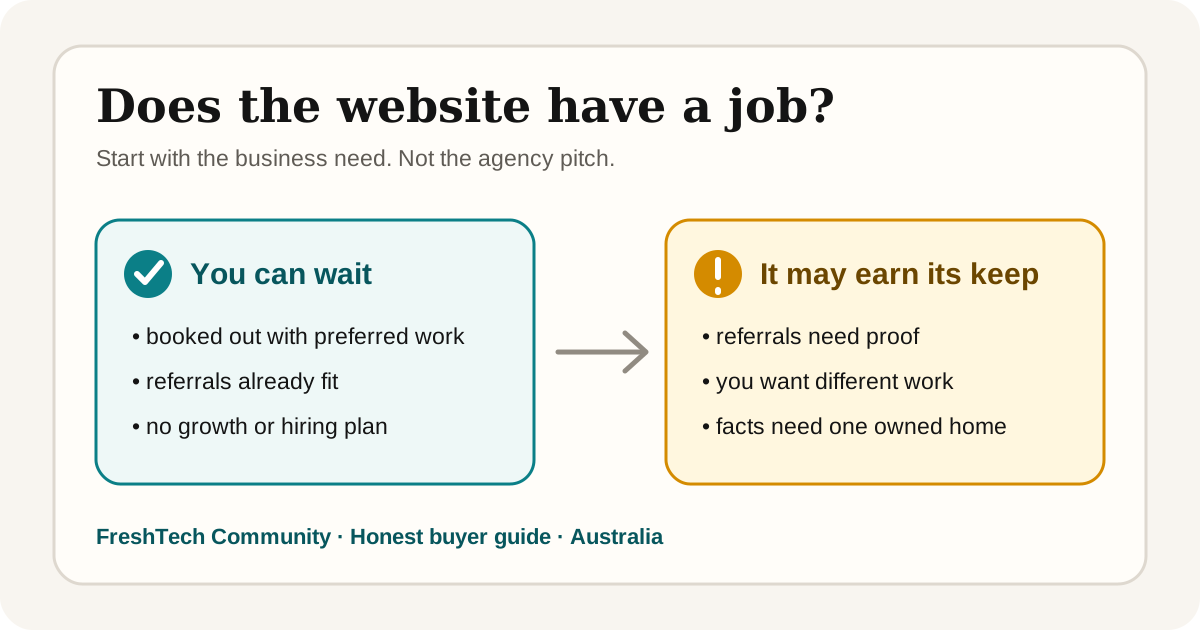
No, not every Australian tradie needs a full website right now. You may be booked out with the work you want. Word of mouth may be steady, with no plan to grow. In that case, a verified Google Business Profile and a good phone path may be enough for now. A site starts earning its keep when you want new work, word of mouth needs proof, or you need one place for jobs, service area, job photos and contact facts.
The weak question is, "Are websites important?" Of course a website firm will say yes. Ask this instead: "What job would a site do for me now?"
Google says an eligible service-area business can use a Business Profile in Search and Maps. It can show the phone, service area, hours, site, photos and reviews. That is handy without a site. An owned page does another job. It can explain the work, show real jobs and keep the buyer path in your hands.
The honest website decision table
| Your situation | Likely next move | Reason |
|---|---|---|
| Booked out with preferred work and no growth plan | Website can wait | Fix your Google profile, phone and referral handoff first. |
| Good word of mouth, but people keep asking what work you do | Start with one clear page | Give people one place to check your work and proof. |
| You want higher-value or better-fit jobs | Build job-led pages | Explain the work you want instead of taking every enquiry. |
| You rely on one social page or directory | Add an owned site | Keep a stable home for facts and a contact path you own. |
| You want Google and AI tools to understand the trade | Publish crawlable facts | A site can link visible facts, job pages and matching structured data. |
When a tradie can wait
You can wait when demand is above your capacity and the work mix suits you. There is no prize for adding a tool you will not keep up.
Before deciding that you need a site, check whether these points are true:
- You do not want more work. Your calendar is full enough and you are not trying to hire or move into a new service.
- Word of mouth sends the right jobs. People know what you do, where you work and how to reach you.
- Your Google Business Profile is right. The name, service area, phone, hours and photos match the real firm.
- You can answer missed leads. A working voicemail, text or call-back plan stops good jobs from going cold.
- You are not dependent on false claims. Your work arrives through real reputation, not copied reviews or pages pretending to serve places you do not cover.
Waiting does not mean ignoring the web. Claim the right profiles. Keep your facts right. Use an email account you own. A good domain can also protect the name for later, even if the first site is not ready.
Six signs a website may earn its keep
- Word of mouth needs proof before the call. A name and phone may start the lead. A clear site can show the trade, real work, service area and next step. The buyer does not need to hunt through old social posts.
- You want better-fit work, not just more work. A clear job page can state the work you want and the work you do not take. That helps screen leads before your phone rings.
- You are hiring or adding room. A second van or staff member needs demand beyond one person's network. The site can support more than one lead source.
- Your key facts are split up. Google, Facebook and old listings may disagree. A site gives people and search tools one stable point to check.
- You need a better quote path. A form can ask for the suburb, job type, urgency and photos when they help. Keep the call option when the job needs a talk.
- You want search tools to understand the trade. Google shows how visible local firm facts can pair with structured data. The code must match the page. It cannot save vague or false copy.
A website is not proof of demand. It cannot promise rank, leads or an AI pick. It gives you a page that search tools can read and people can test. The page can state real facts and guide the next step.
Google Business Profile versus a website
Use both for separate jobs. Google Business Profile helps eligible local firms manage how they appear on Search and Maps. A site gives you your own pages, domain, copy and buyer path.
| Job | Google Business Profile | Owned website |
|---|---|---|
| Local discovery | Shows business details in Google Search and Maps. | Can appear in organic results for useful business and service pages. |
| Reviews and photos | Customers can review; the business can add and manage photos. | Can explain projects in context using permissioned evidence. |
| Service detail | Supports a short profile and work facts. | Can answer each buyer question in full. |
| Control | Runs under Google's product rules and interface. | You control the domain account, page copy and handover terms. |
| Best use | Clear local facts and client contact on Google. | Owned proof, job detail and a clear quote path. |
Do not make the profile and site compete. Link them. Keep the name, phone, service area and hours honest and up to date. Google also tells home-based service firms when to hide that home address from the public.
What about a Facebook or Instagram page?
A social page can show recent work and give customers another contact path. Keep it if customers use it. It does not need to become your only source of truth.
Posts move down a feed. Service explanations get split across captions. Some customers do not use the same platform. An owned site can hold the stable facts while social posts show current activity. The two channels can link to each other.
The choice is not "website or social". Ask which channel should hold each fact. Put core trade facts, job pages, contact options and policies on the owned site. Use social pages for new work, chats and reach.
The smallest useful tradie website
Start smaller than most agency proposals. A one-page site can be enough when it answers the main customer questions well.
- Who you are: the real business name and trade.
- What work you want: clear jobs in plain words.
- Where you work: a truthful service area, not a list of pretend locations.
- Why someone can trust the claim: real job photos used with consent, key trade details and links to genuine public reviews.
- What to do next: a tested call, quote or booking path that fits the job.
- Who controls it: the domain, site account, leads and renewals stay with you.
Add a job page when it answers a new buyer question. Add a project page when you have real proof and consent. Add articles only when people keep asking a question that needs a clear answer. Use the one-page versus multi-page website decision guide before buying a fixed page package.
Before final payment, run the full Australian tradie website acceptance checklist. It covers mobile use, ownership, privacy, search setup and enquiry delivery.
A seven-step decision before you spend
- Name the goal. Write down if you want more work, better-fit work, easier proof, staff demand or a better quote path.
- Check the current channels. Search the business name, inspect the Google profile and follow the referral path on a phone.
- Find the missing buyer answer. Note what a good lead cannot check today: work, area, proof, free time or next step.
- Choose the smallest page set. Start with one strong page unless distinct jobs need their own clear page.
- Secure the domain and accounts. auDA says .au names have set rules. Use an approved provider. Keep the account under your firm's control.
- Build visible facts before special code. Write clear copy first. Add LocalBusiness structured data only when it matches the page.
- Test one real path. Open the site on a phone. Read it as a new buyer. Send a test and make sure it arrives.
Questions to ask a website provider
- What exact business problem will this site solve?
- Which pages are included, and why does each page exist?
- Who owns the domain, hosting, copy, design and image rights?
- What renews each month or year?
- How will you prove the phone, form and mobile path work?
- What happens to the site and domain if we stop working together?
- Which search work is included, and which outcomes are not guaranteed?
Common questions
Can a tradie get work from Google without a website?
Yes. An eligible, verified Google Business Profile can help a service-area firm appear in Search and Maps. Keep the profile right and follow Google's rules. A site adds an owned place for deeper proof, job detail and leads.
Is one page enough for a tradie website?
It can be. One clear page is better than five thin pages. Add more when each job or buyer question needs its own answer.
Should I build a website if I am already booked out?
Only if it has another job. It may bring better-fit work, help hiring, protect the trade name or make word of mouth easier to check. If none of those matter now, keep the channels you use.
Will a website put my trade business at the top of Google?
No. A site can make real trade facts easy for search tools to read. Rank still depends on the search, place, rivals, public proof and how the search tool reads the site.
Should my Google profile link to the website?
Yes, when the site shows the same real firm and the link follows Google's rules. Keep the facts on both pages up to date and in sync.
Build it when it earns its keep
If you need one owned place for your trade, work, proof and next step, FreshTech Shield is built for that job. No fake reviews. No rank promise. No giant site you cannot keep up.
Next, compare a DIY website builder with hiring a web professional. You can also see the FreshTech website options, read how to help Google AI and ChatGPT understand a trade business, or learn why FreshTech exists.
See all FreshTech guidesSources
- Australian Government: Set up a business website, accessed 1 August 2026.
- Google Business Profile Help: Get started with Google Business Profile, accessed 1 August 2026.
- Google Search Central: LocalBusiness structured data, accessed 1 August 2026.
- auDA: How to register a .au domain name, accessed 1 August 2026.
Editorial note: FreshTech Community prepared this guide from current official sources and public website evidence. It contains no paid placement, affiliate link, fabricated result, copied review or ranking guarantee. It is general information, not legal advice.