Pricing on a tradie website in Australia
Should a tradie show prices on their website?
A useful price page does not have to publish every rate. It should tell a buyer what can be priced now, what can change, and what happens before a final quote.
Direct answer
Show a price when the job is defined well enough to make that price honest. Use a fixed total for a repeatable service with clear inclusions. Use a range when you can explain what moves the final amount. A genuine from-price can also work. Use “quote required” when access, condition, materials or scope must be checked first. The goal is not full price exposure. It is a clear fit test before a customer calls.
Quick rule: the less certain the scope, the less exact the public number should be. The explanation beside the number becomes more important as the scope varies.
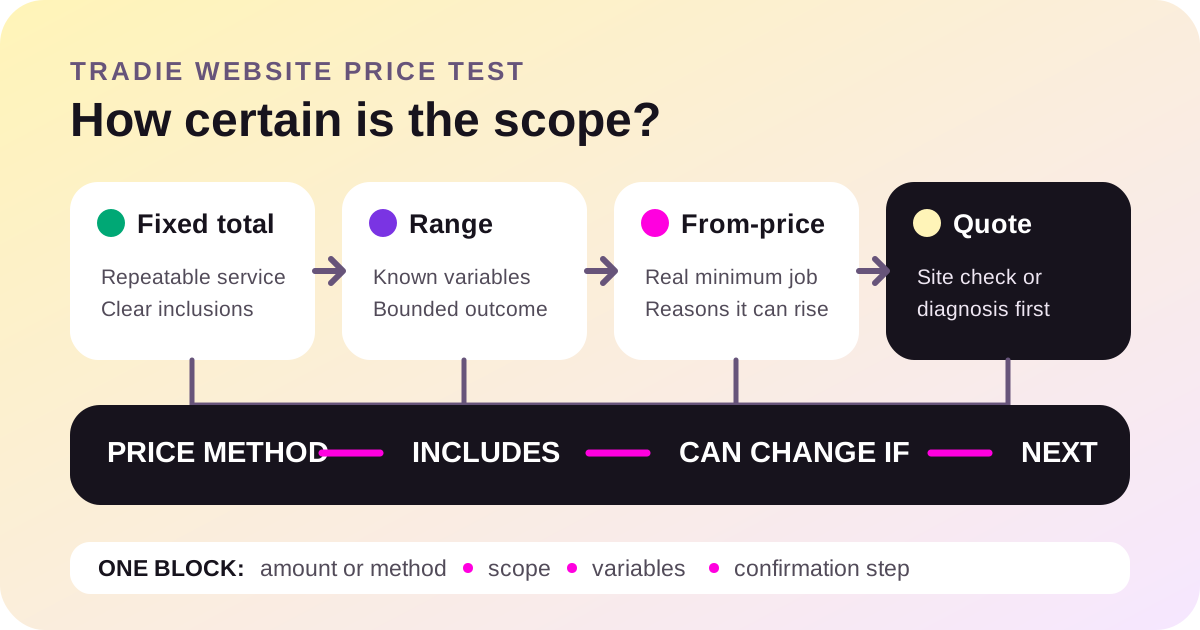
Four ways to show service prices online
No single display method fits every trade. A standard maintenance visit is not the same as fault finding behind a wall. A small, measured job is not the same as a renovation with unknown site conditions.
| Display method | Use it when | State beside it | Main risk |
|---|---|---|---|
| Fixed total | The service, limits and normal inputs are repeatable. | What is included, what is excluded and any unavoidable fee. | The page leaves out a charge the buyer cannot avoid. |
| Price range | The job has a small number of known variables. | What usually places a job near the low or high end. | The range is so broad that it does not help anyone decide. |
| From-price | A real minimum service exists and can be bought at that amount. | The exact minimum scope and the common reasons the price rises. | The headline attracts buyers to an amount few jobs can receive. |
| Quote required | A site check, diagnosis, plan or material choice controls the cost. | What information you need, whether a visit has a fee, and the next step. | “Call for a quote” gives no idea what the business needs from the buyer. |
This table is a website decision framework. It does not mean one format is legally safer in every case. A business should check its own facts and get legal advice when needed.
Use the scope test before publishing a number
Ask four questions before choosing the price format. Does an answer become uncertain? Move from a fixed total to a range, from-price or quote path.
- Can you describe the service in one plain sentence? Name the result, size, time boundary or unit that makes the service repeatable.
- Can the buyer confirm the main inputs? Photos, measurements, model details, address and access may remove uncertainty before a visit.
- Can you name the variables that change the amount? Name access, condition, travel, urgent timing and materials. Do not hide extra work until the invoice.
- Can you honour the displayed method? A real fixed service needs a real total. A real minimum needs a genuine job that fits it. A range needs a reason for both ends.
For example, a business may define one standard inspection with clear limits. It may not be able to price the repair until the cause is found. The page can show the inspection method. It can explain that a repair needs approval after the cause is found. That is clearer than pretending the whole job is fixed.
A second example is a surface job. Can the page confirm the area, preparation and material? A range may help. Damage, access or hidden work may change the scope. If so, say that before asking for the customer’s details.
Australian price display rules still apply online
The Australian Competition and Consumer Commission says businesses must give clear and accurate prices. This must happen before a customer books, orders or buys. A displayed total must include taxes and unavoidable or pre-selected extra fees. A true optional extra can sit outside the base total.
The ACCC also says price information on a website must not create a false impression. Fine print cannot contradict the main message. Leaving out an important condition can mislead when that detail matters to the buyer’s decision.
That matters for a “from” amount. The large number and the nearby explanation should work together. Do not rely on a faint note at the bottom of the page. Important exclusions should sit beside the advertised service.
Australian Government guidance gives the same practical direction. Displayed prices should be clear, accurate and not misleading. This guide is general information only. It does not replace advice about a specific ad, contract or job.
Build a four-line price block
A buyer should not need to scan three pages to understand the number. Put the amount, scope, variable and next step in one block.
| Line | What to write | Question it answers |
|---|---|---|
| 1. Price method | Fixed total, range, from-price or quote required. | What can I know now? |
| 2. Includes | The work, time, area, parts or visit covered by the displayed method. | What am I getting? |
| 3. Can change if | The short list of conditions that can change the scope or amount. | What could make it different? |
| 4. Next step | The photos, details, call, booking or site visit needed for confirmation. | What do I do next? |
Keep the important condition beside the price. A separate terms page can hold full detail. It should not carry the only explanation of a likely extra cost.
Keep the final quote separate from the website guide
A public price block helps a buyer decide whether to continue. A written quote records the actual work and terms. Do not make the web page carry details that belong to the job-specific document.
Business.gov.au lists what a clear quote should include. That covers the business and customer details, the work, itemised costs and the total. It also covers GST where it applies, agreed changes, payment terms and timing. Add an expiry date and a place for acceptance. The guidance says an accepted quote becomes a legally binding contract.
That is why labels matter. If a website number is only a guide, call it a guide or estimate. State what still needs to be confirmed. If it is a fixed service customers can book, make the included scope plain. Keep a written record of an accepted formal quote and any later change.
The website should make the handoff easy. Ask only for information that helps confirm the job. Our tradie website acceptance checklist includes a real enquiry test. It checks that the form and alert reach the right person.
A six-step website pricing review
- List the services people ask about most. Do not start with every item in the business. Start with the repeated buyer questions.
- Group them by scope certainty. Mark each service fixed, bounded, minimum-led or inspection-led.
- Choose one display method per service. Avoid mixing “fixed”, “from” and “estimate” for the same offer without explaining the difference.
- Write the four-line block. Put the method, inclusions, variables and next step together.
- Check the total and the main impression. Handle taxes and unavoidable charges correctly. Make sure fine print does not undo the large message.
- Test with a real enquiry. Ask someone new to the service what they think it costs and includes. Ask what happens next. Rewrite any line they cannot answer.
The business may also need to choose who should build the page. Compare the roles in our DIY website builder versus web professional guide. Whoever builds it still needs the real service scope from the trade business.
Common questions
Will public prices make every customer choose the cheapest tradie?
Some buyers compare only price whether the number is public or not. The page can also show scope, proof and the reason a job needs checking. Do not use an unsupported claim about quality or savings. Explain the work a customer can actually verify.
Can I show an hourly rate instead of a job price?
You can explain a rate when it helps the buyer. The customer may still need to know the call-out, minimum time, travel and materials. Show other unavoidable parts of the total too. A rate alone can create the wrong impression when those parts are likely to apply.
Is “contact us for pricing” enough?
It may be honest when the scope cannot be known online. It is not very useful by itself. Tell the buyer what details you need. Say whether a site visit is involved. Explain what they will receive after first contact.
Should I copy a competitor’s price format?
No. Their scope, costs, service area and inclusions may be different. Build the display from your own service facts. The ACCC says comparative claims must be accurate and fair.
Does a tradie need a full pricing page?
Not always. One clear block on each service page may be easier to keep current. A separate pricing page can help when several services use the same rules. Start with the smallest page the business can maintain.
Publish the method, not a made-up number
Choose one real service. Write its price method, inclusions, variables and next step. Are those four lines honest and useful? Publish them together. If not, keep the quote path. Explain what must be checked first.
Still deciding how much website the business needs? Read does every tradie need a website? You can also compare the current FreshTech options and inclusions. Then check who operates FreshTech.
See all FreshTech guidesSources
- Australian Competition and Consumer Commission: Price displays, accessed 13 August 2026.
- Australian Competition and Consumer Commission: False or misleading claims, accessed 13 August 2026.
- Australian Government: Display prices, accessed 13 August 2026.
- Australian Government: Prepare quotes, accessed 13 August 2026.